School Trip Friday – Chapel of St Peter’s on the Wall, Bradwell
Last week I posted on my blog my first post about our School Trip Friday – trips that my child and I take as part of our home education programme. This week, my School Trip Friday is along the salt marshes of the Essex coast. Essex is much maligned on tv and in the national press but its coast-line has some of the most beautiful but wild, remote and isolated areas within East Anglia. This is a School Trip Friday which took place during late summer – hence the crops still in the fields! This School Trip Friday combined history and religion (St Peter’s Chapel at Bradwell), along with geography (Geocaching along the coastline) and science (butterfly hunting).
How else but walking through our beautiful countryside can we achieve the combination of teaching Roman history along with the Dark Ages and World War 2 all on one glorious day out!
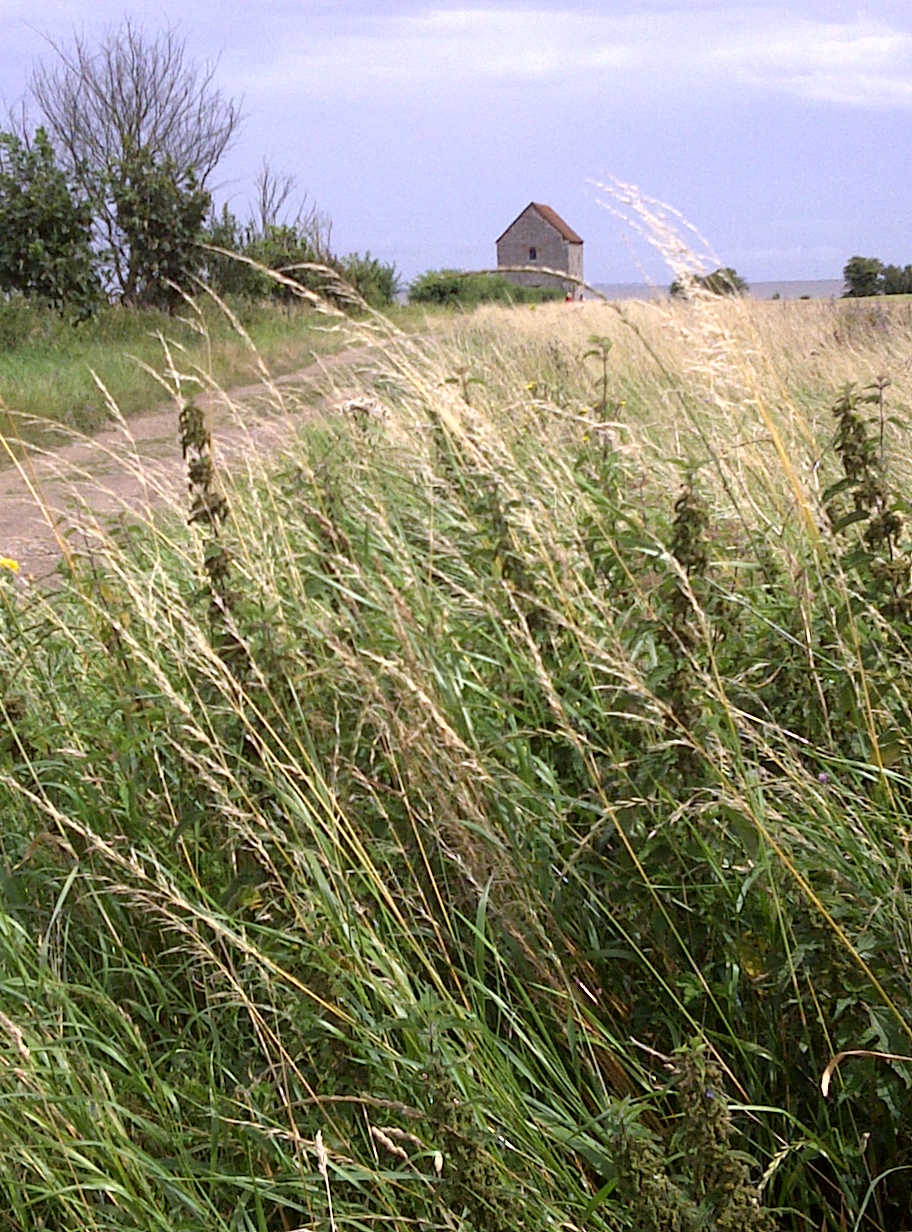 The rough track leading to the isolated chapel
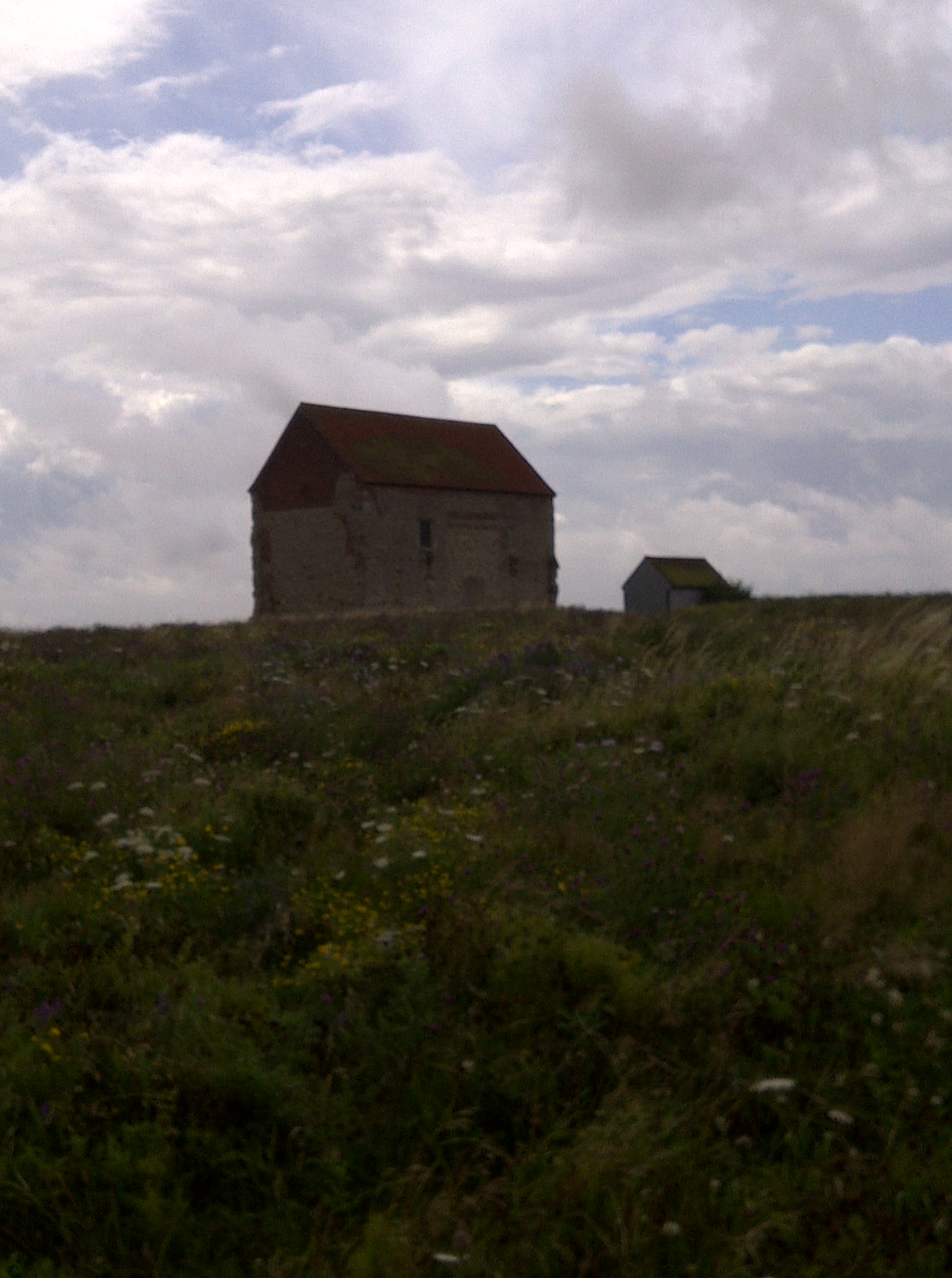 The view of the Chapel from the coast-line
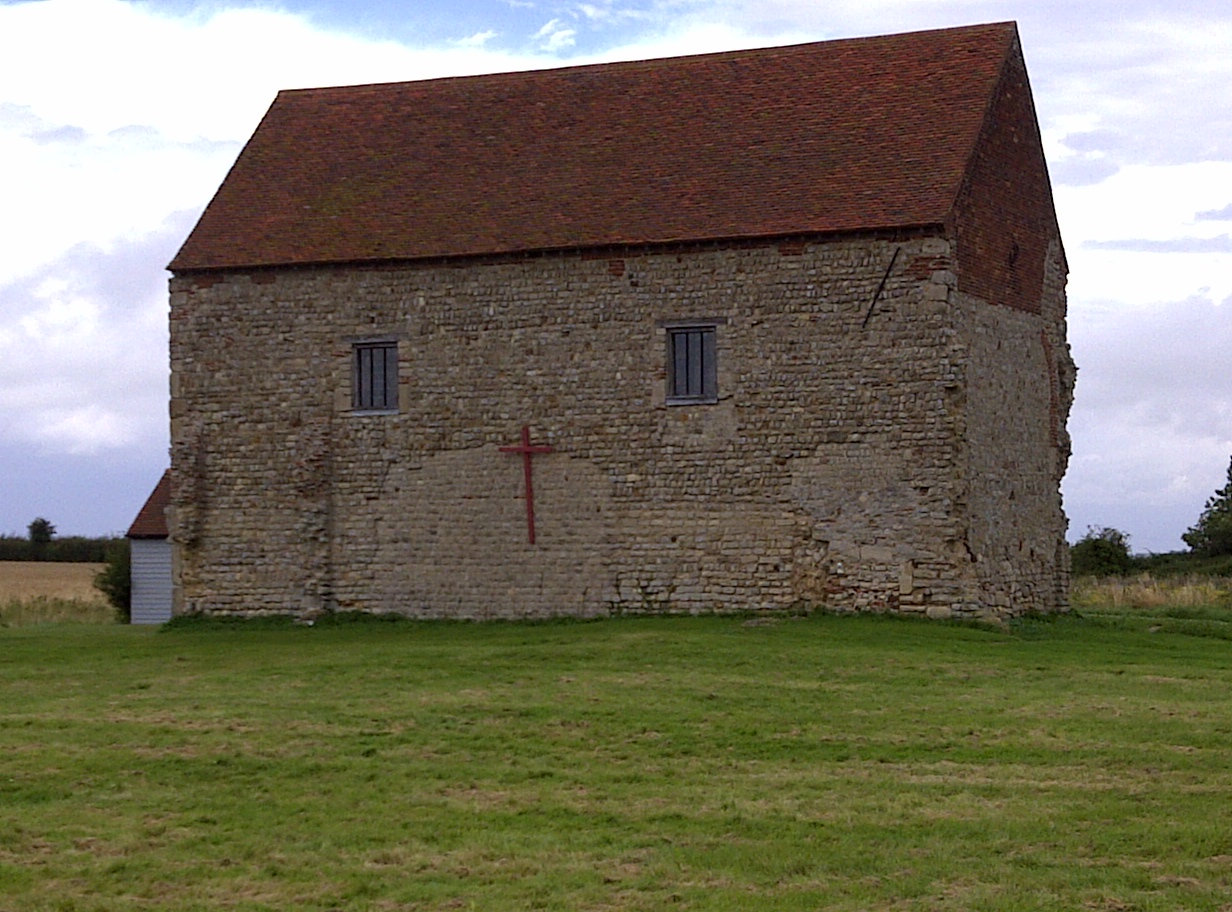 In AD653, Cedd arrived from Lindisfarne to spread Christainity on the request of the King of the East Saxons, Sigeberht the Good. The following year, Cedd became the Bishop of Essex and built his Cathedral of St Peters. It was built on the foundations of the Roman Fort where the gatehouse had been – hence its name ‘St Peter-on-the-Wall’. It is one of the oldest surviving churches in England.
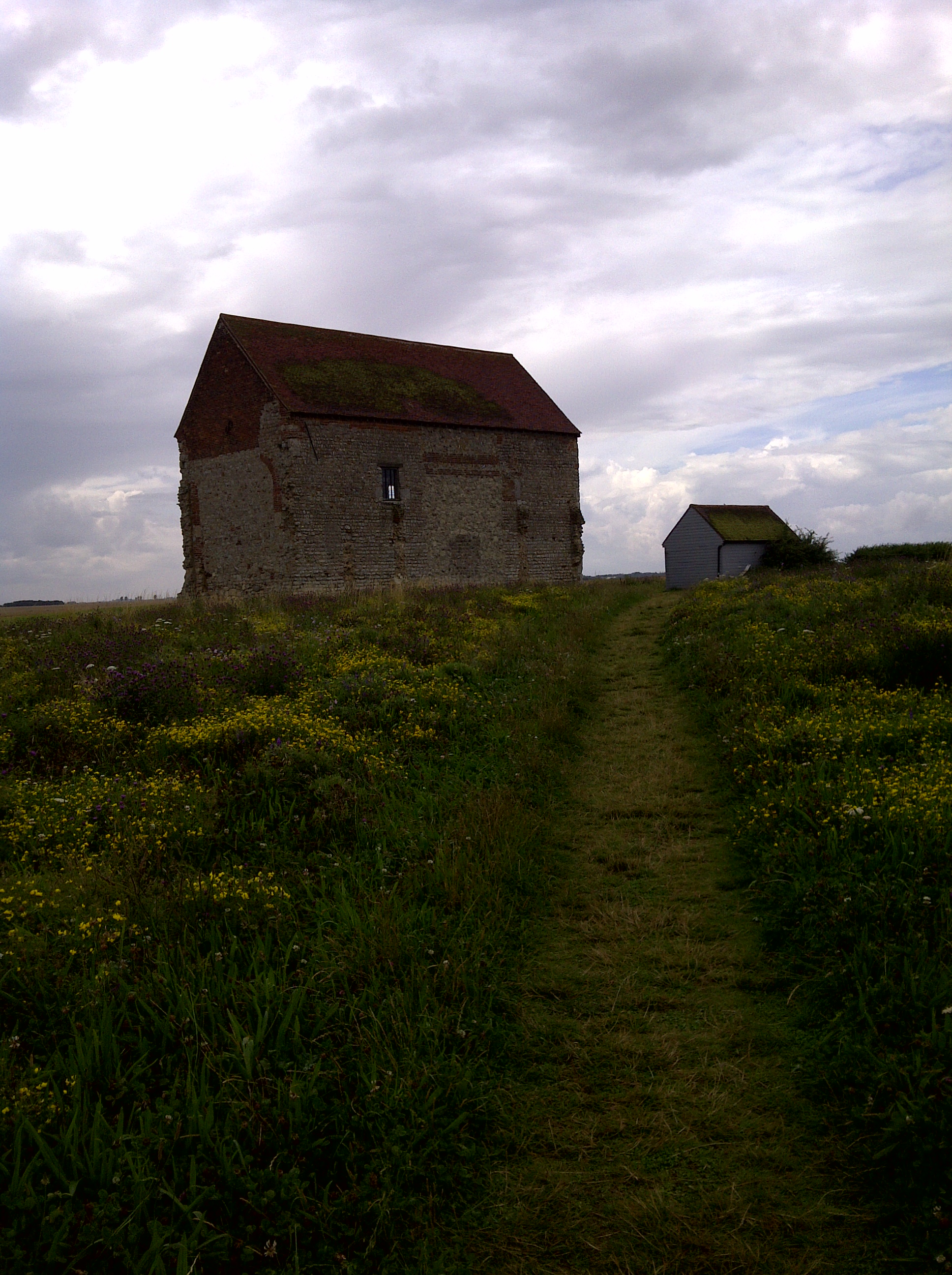 From the approximately the 18th century until 1920, the Chapel was used as a barn for storage and the shelter for cattle.
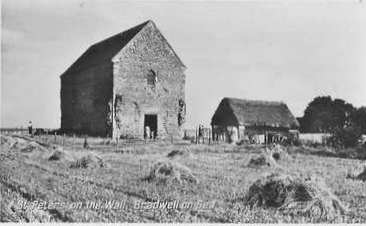 A postcard from when the chapel was still used for storage and cattle
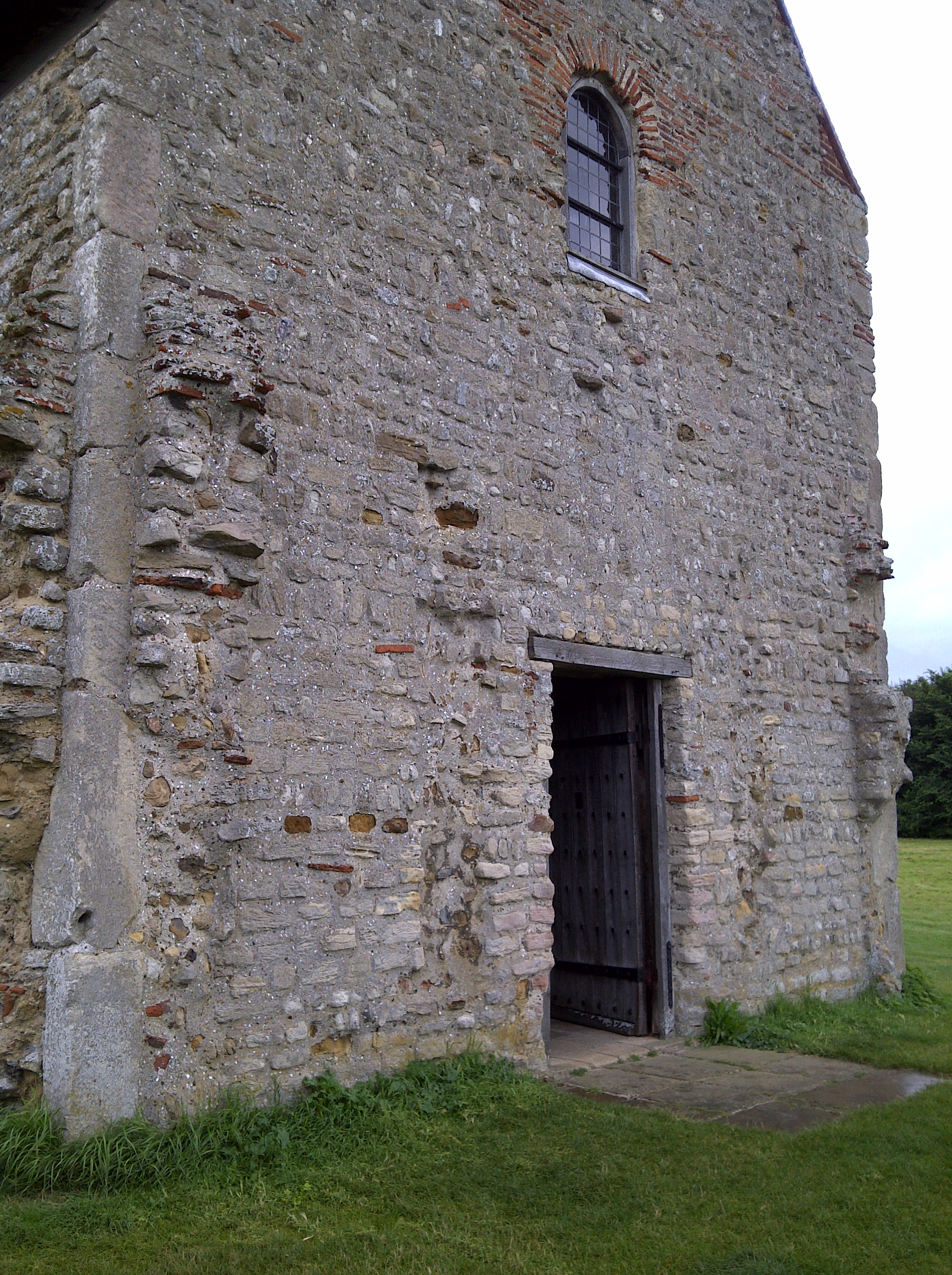 The door leading into the chapel
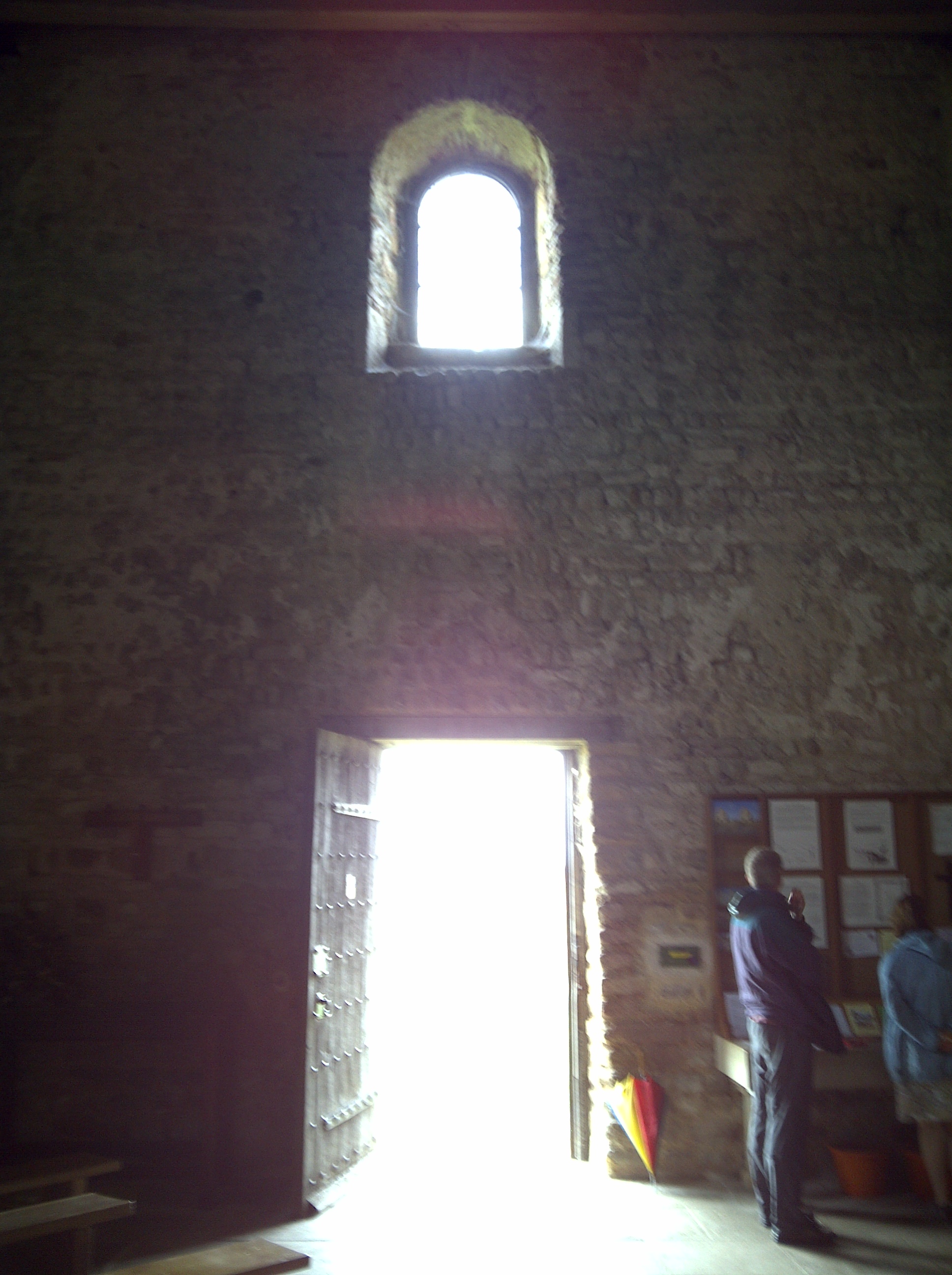
The late Summer light streaming into the Chapel
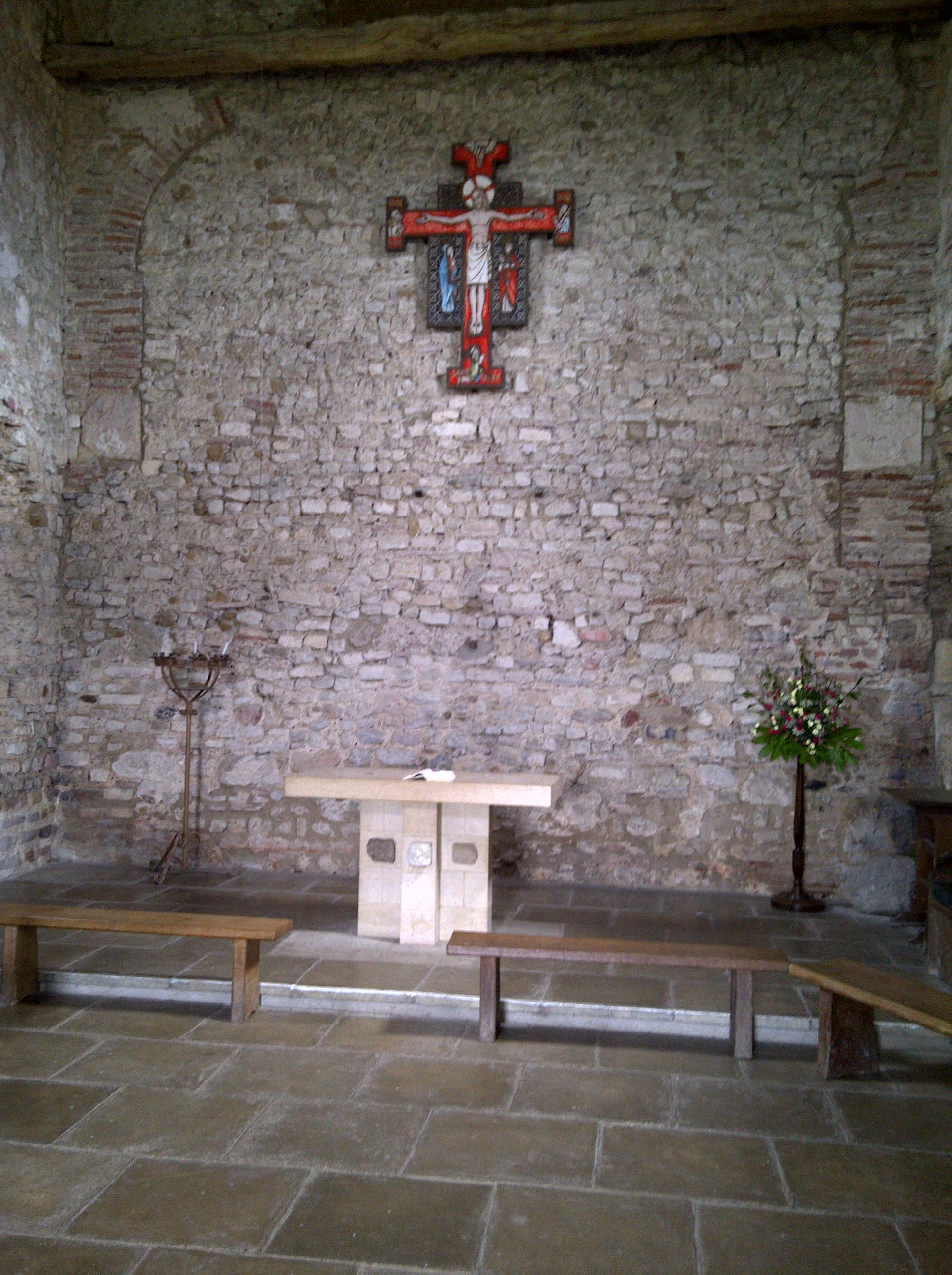
Inside the Chapel – the simple altar
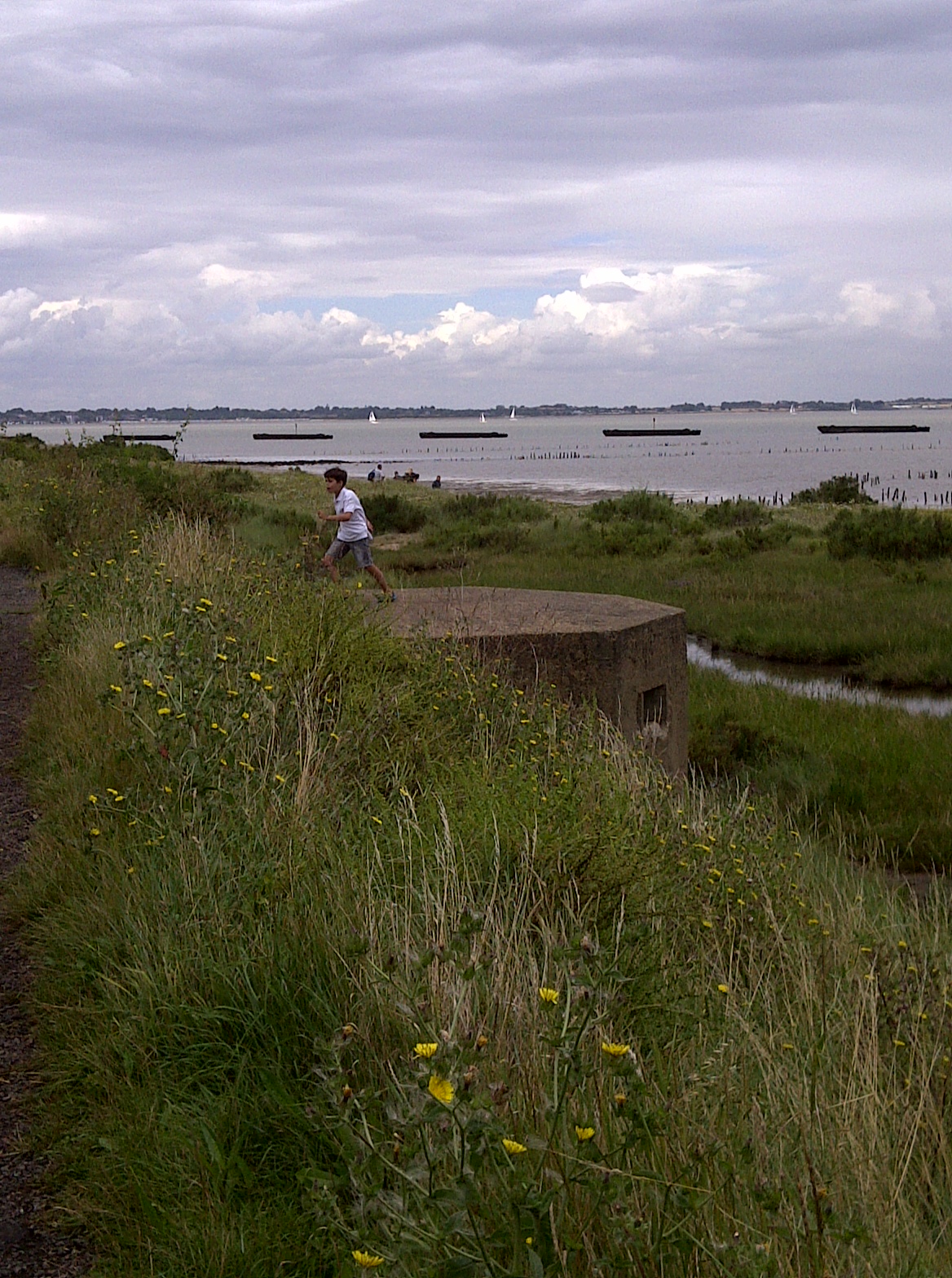 Outside the Chapel on the sea wall. This part of the Essex coast-line is full of Second World War Pill Boxes – a line of sea defences built to protect England from any possible German invasion. The wild sea and mud of the salt marshes have reclaimed many of the pillboxes
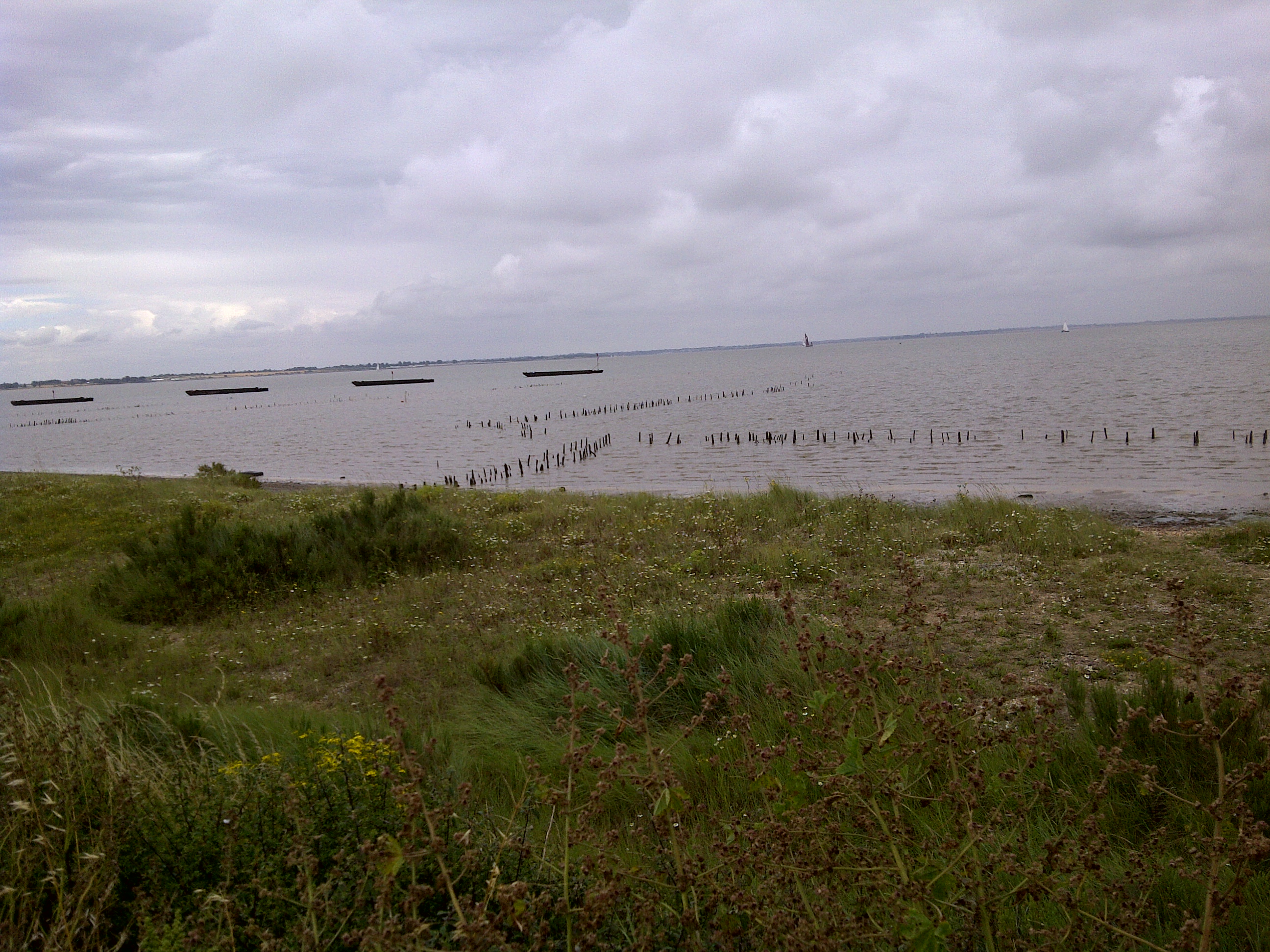 An ancient fishing structure still visible in the water even at mid-tide
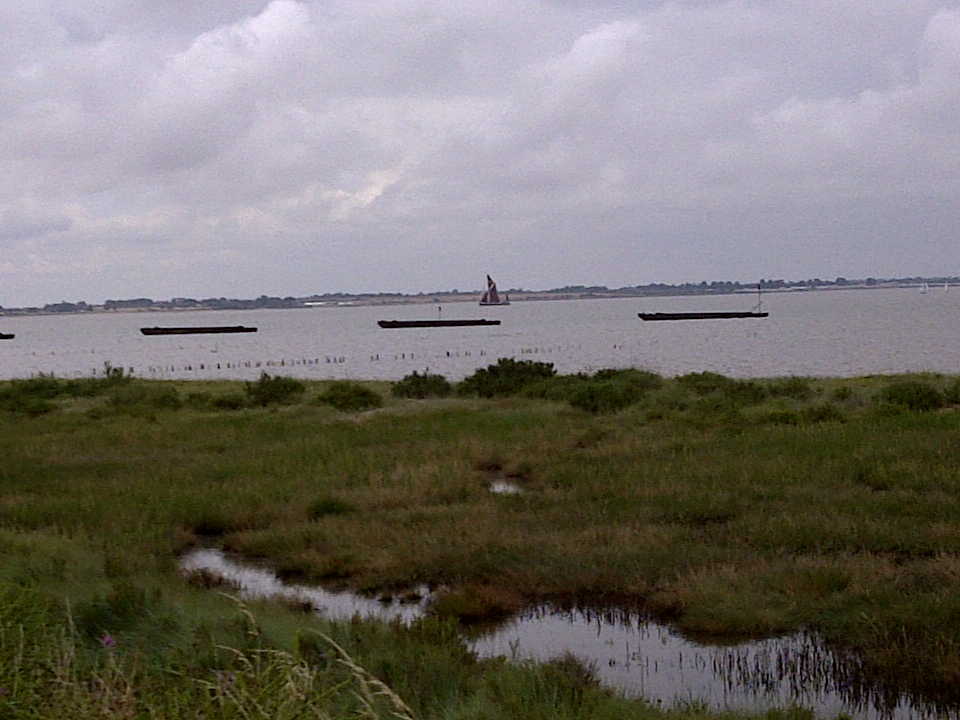 The red sails of a magnificent Thames Barge clearly visible in the distance.
All pictures are © Essex Voices Past
and may not be produced without permission
Further reading
– Second World War – GHQ Line
– Great Dunmow’s Second World War Pill Boxes
– Military Pill boxes
– Pill Box Study Group
– St Peter’s on the Wall, Bradwell
You may also be interested in
– School Trip Friday – Weald and Downland Open Air Museum
Join us this time next week for our next School Trip Friday…!
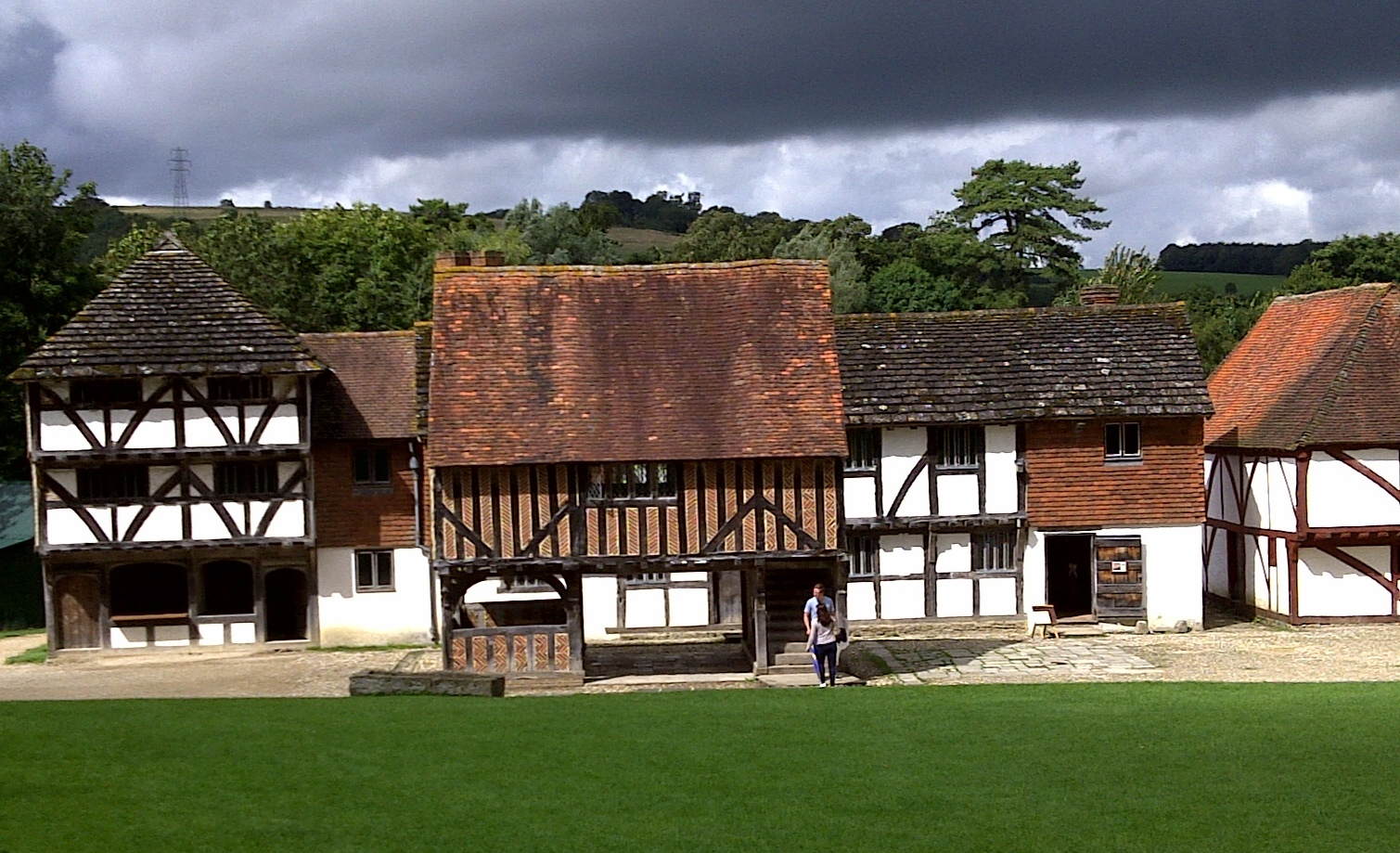 Storm clouds gathering over the market place.
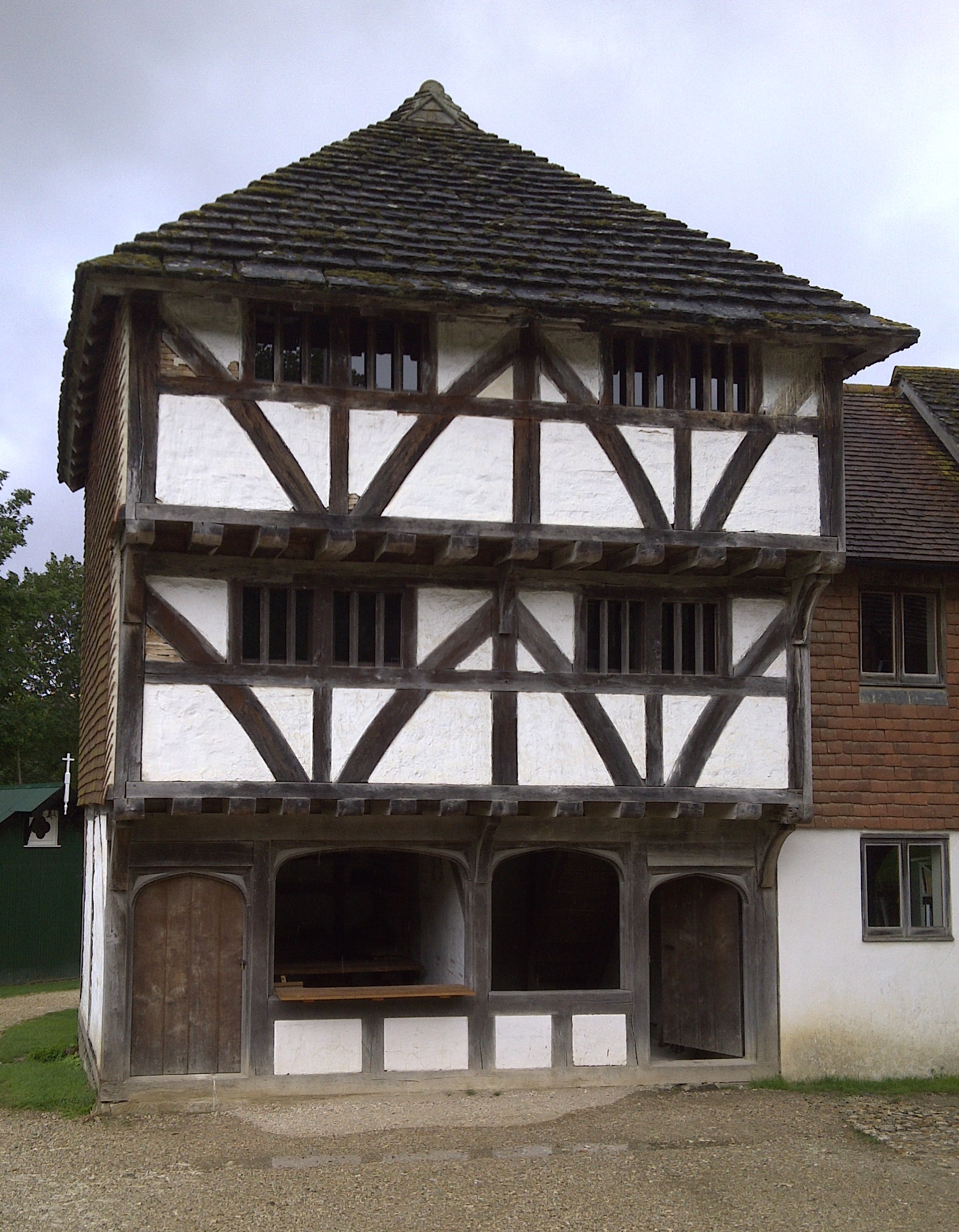 Medieval Shop from Horsham, Sussex.
 Upper Hall from Crawley (circa 1500). The ground floor was divided into separate rooms and the first floor was one long open room (perhaps used as a meeting room). Both ends of the building are not the original (only one end is visible in my picture – in the centre) – they are modern ends added because the original ends no longer exist.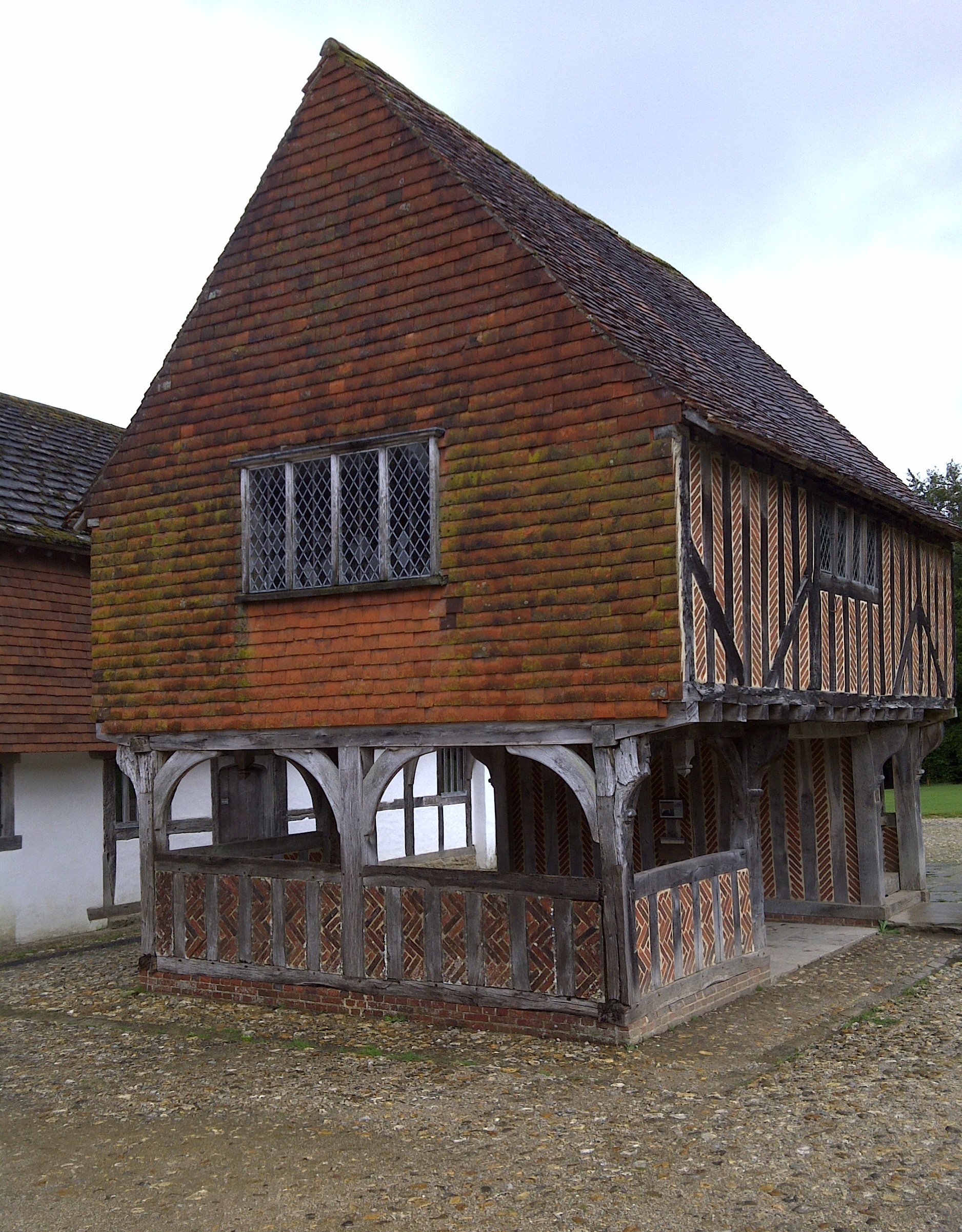
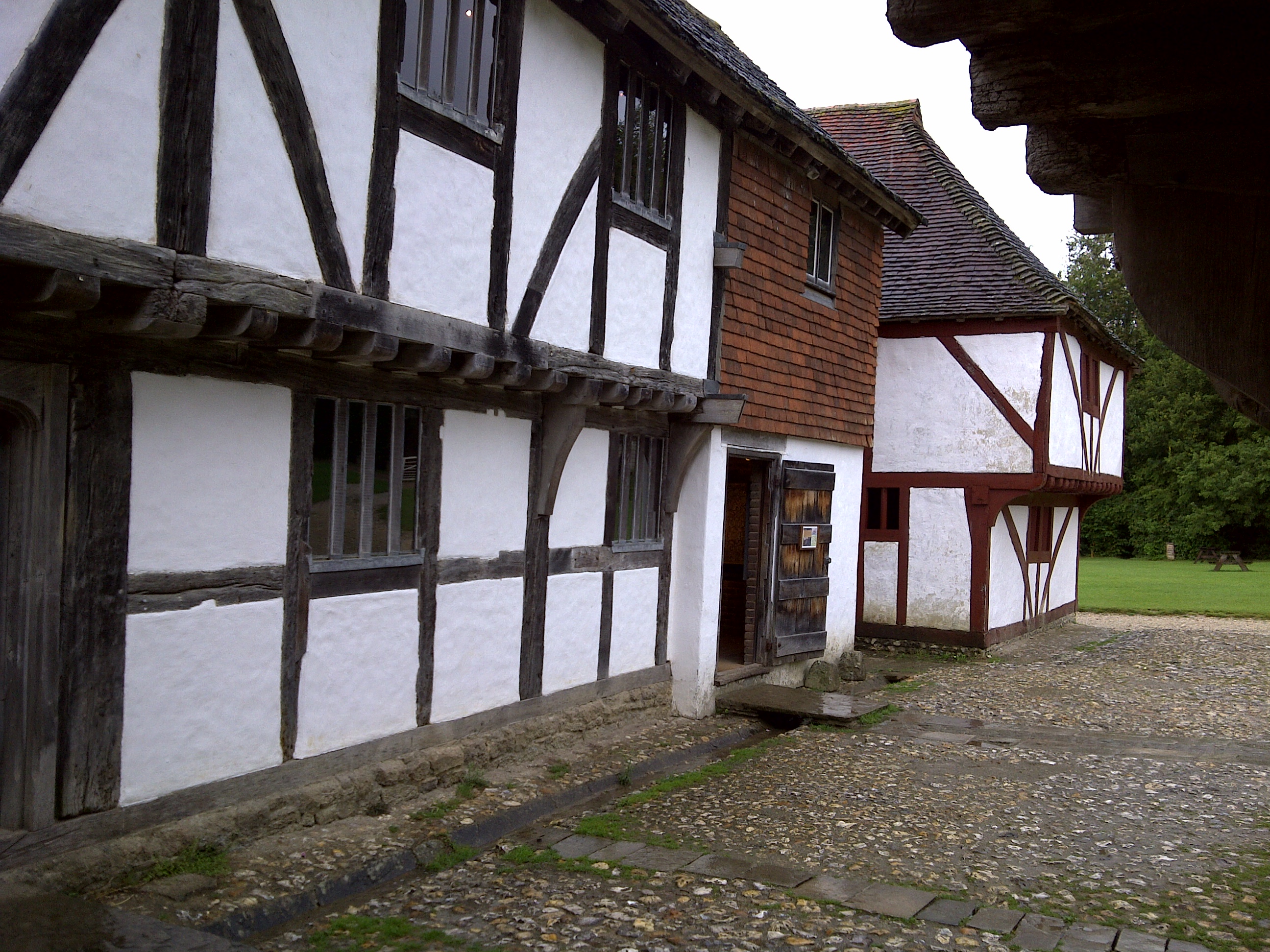
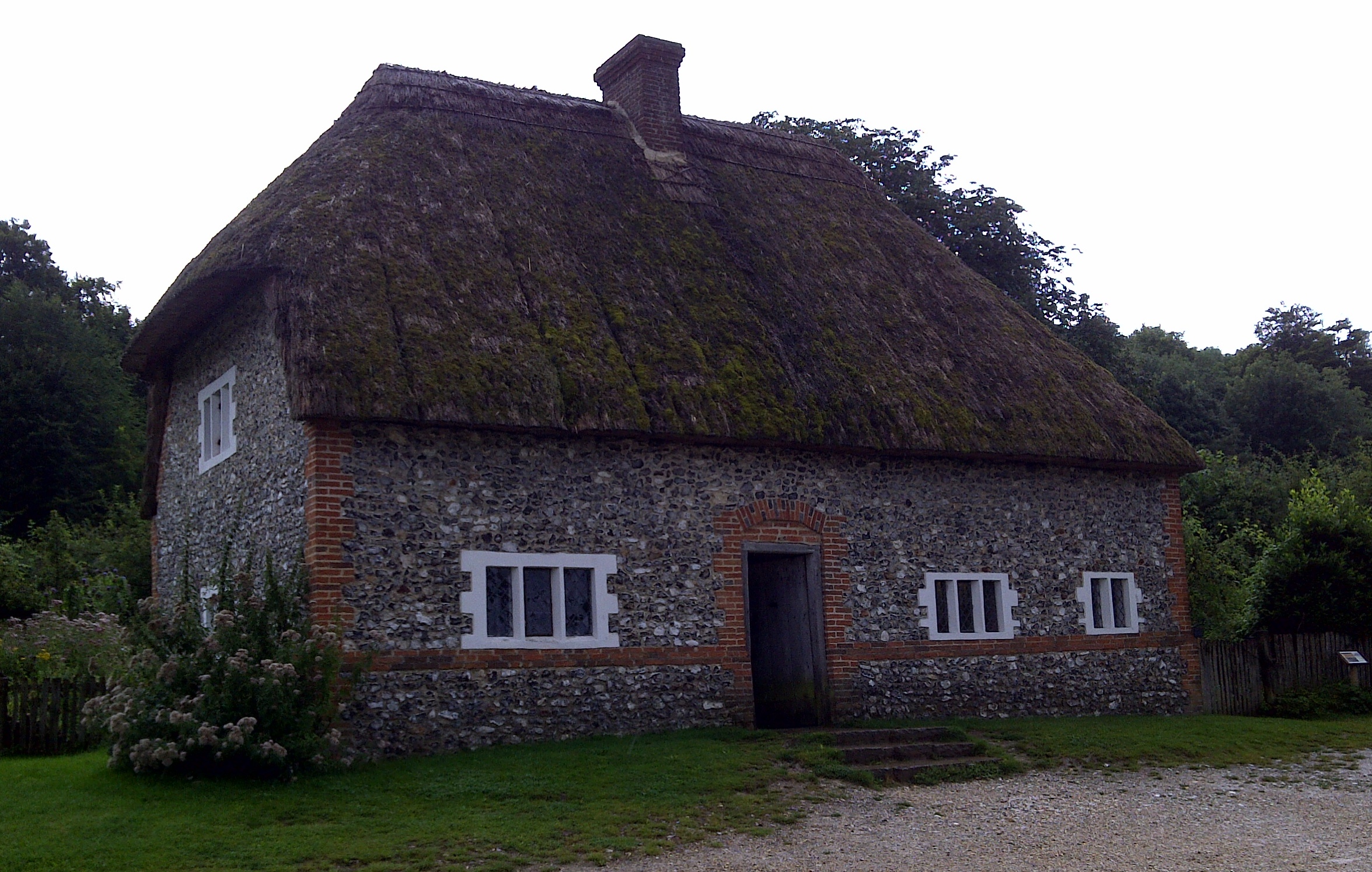 House from Walderton, Sussex. This is a 17th century building constructed of flint and brick. This was our 2nd favourite building of the day – mainly because one of the museum’s wonderful volunteer helpers spent a long time talking to my child about the house. We were shown the indentations on the cobbles by the hearth (inside) caused by hob-nailed boots where the man of the house used to stand and shuffle, trying to warm himself in front of the fire. We were shown how the building was constructed and altered over hundreds of years of occupation to suit each new generation. The front door was of great fascination because of the over-sized lock! All the nooks and crannies within this incredible house was scrutinized and studied in depth through the eyes of an 8 year old child. The volunteers and staff love their museum and I thank them for the patience and trouble they took with my child.
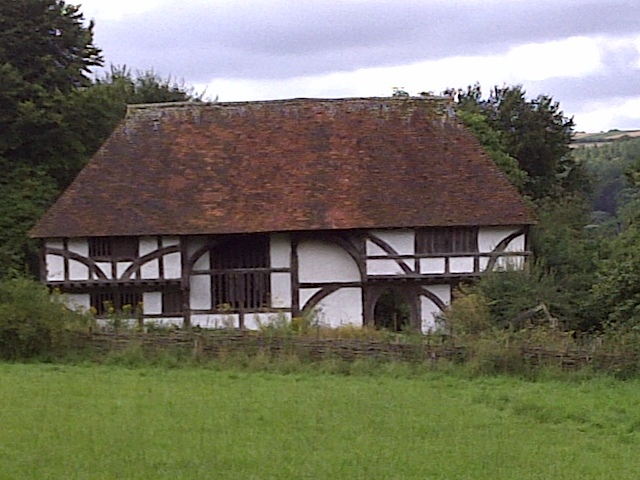 ‘Bayleaf Farmstead’ – Wealden House from Chiddingstone, Kent.
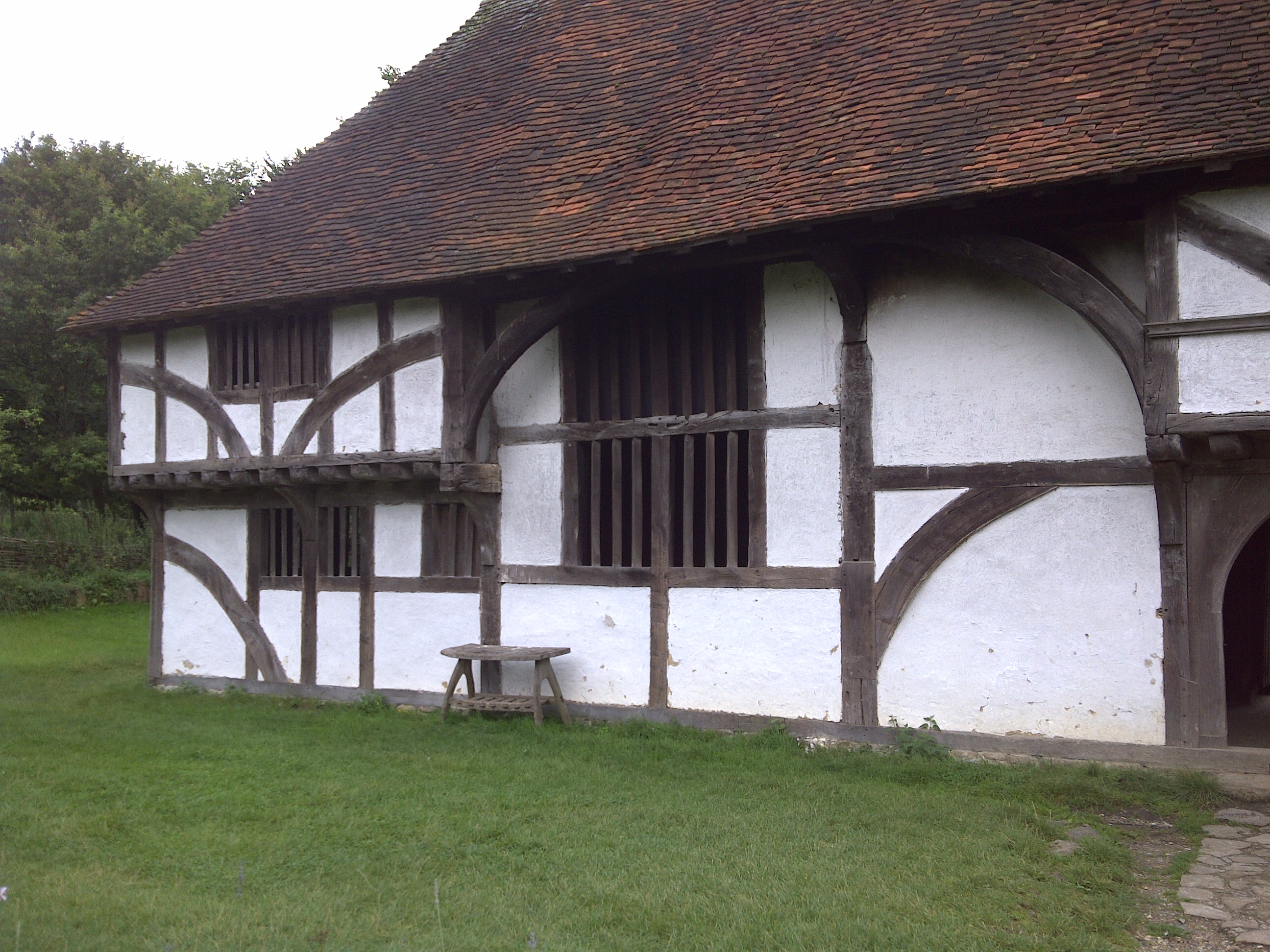 ‘Bayleaf Farmstead’ – Wealden House from Chiddingstone, Kent.
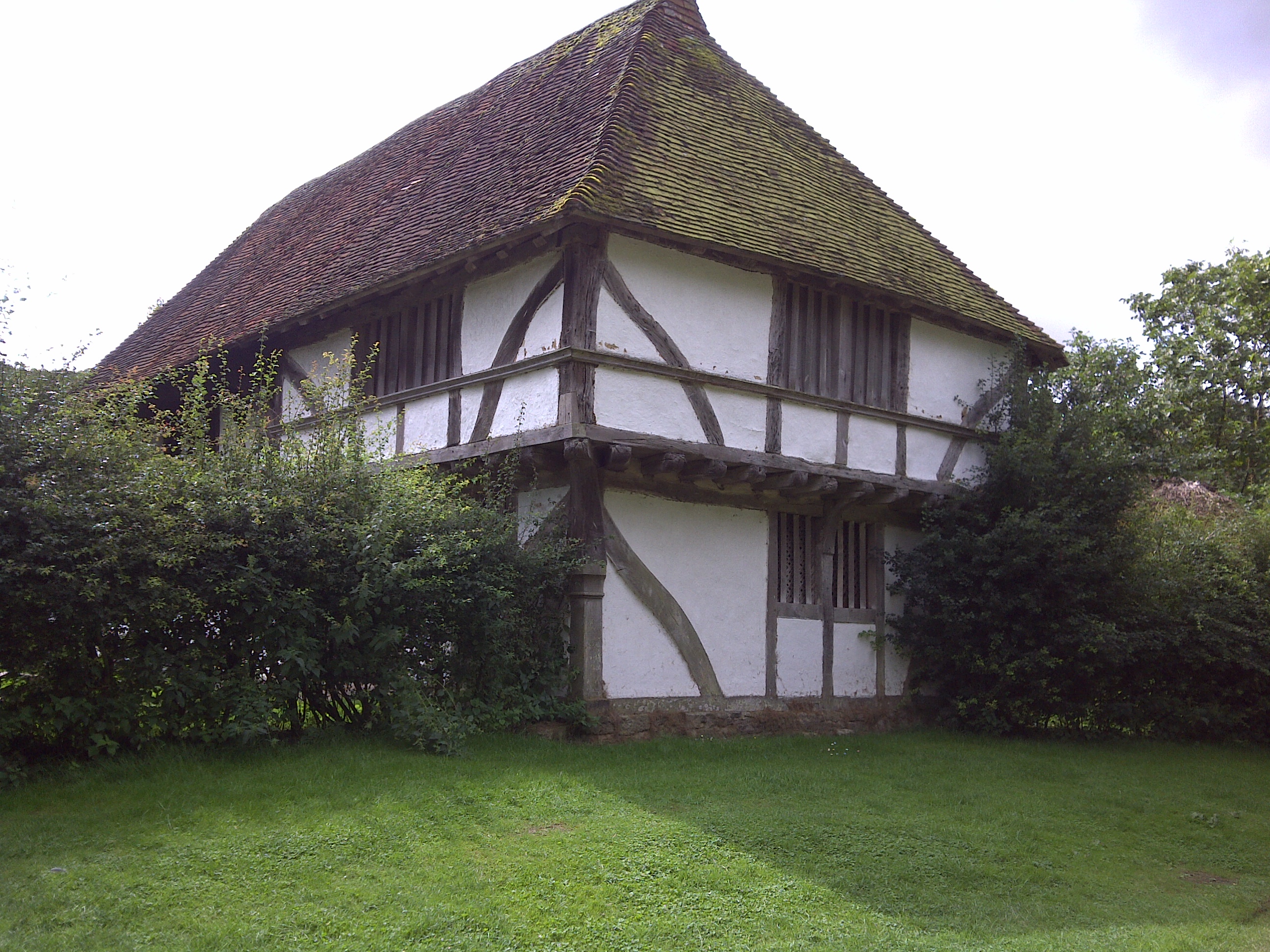 ‘Bayleaf Farmstead’ – Wealden House from Chiddingstone, Kent. A timber-framed hall-house from the early 15th century.
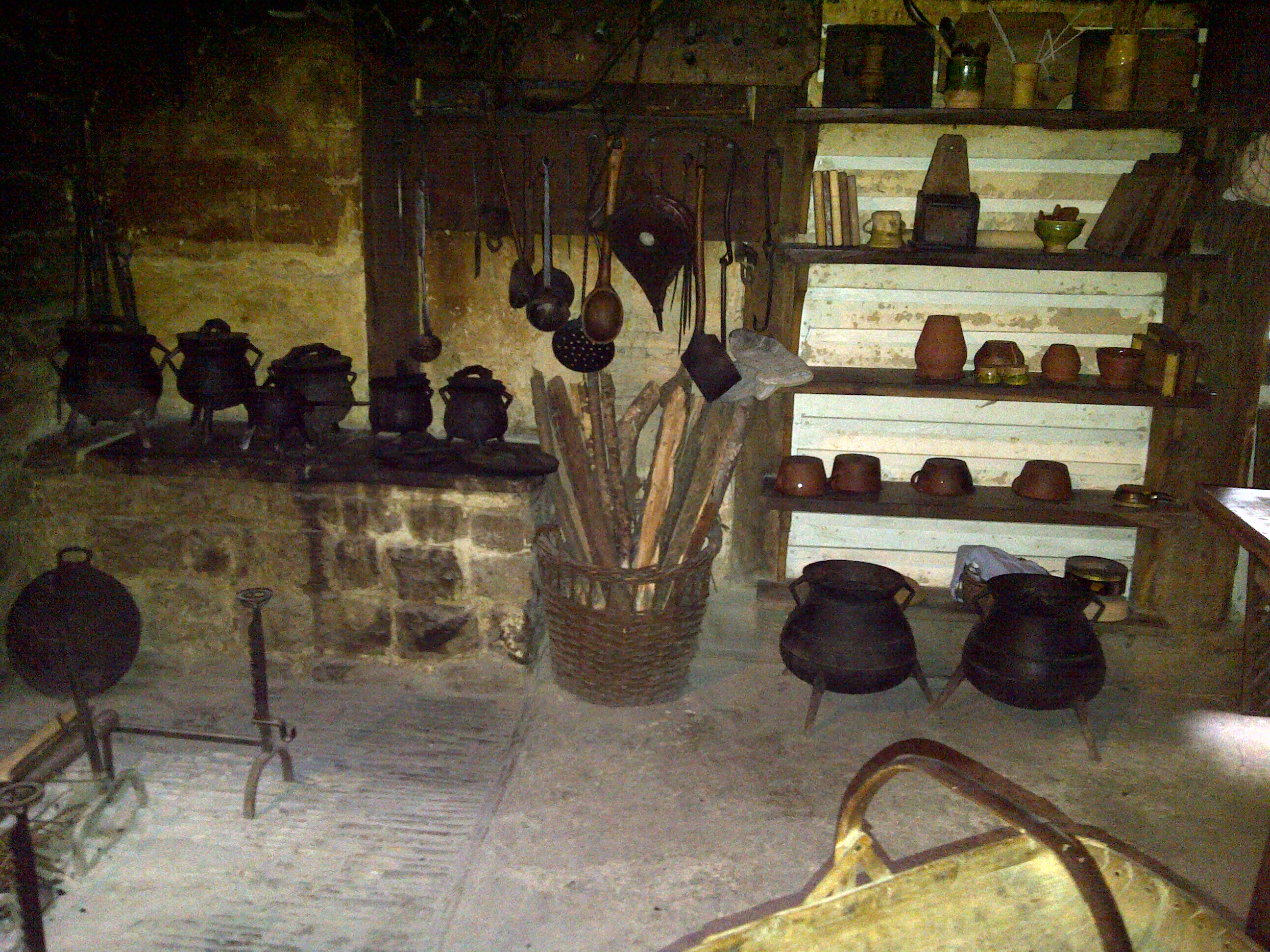 Inside the Wealden House from Chiddingstone.
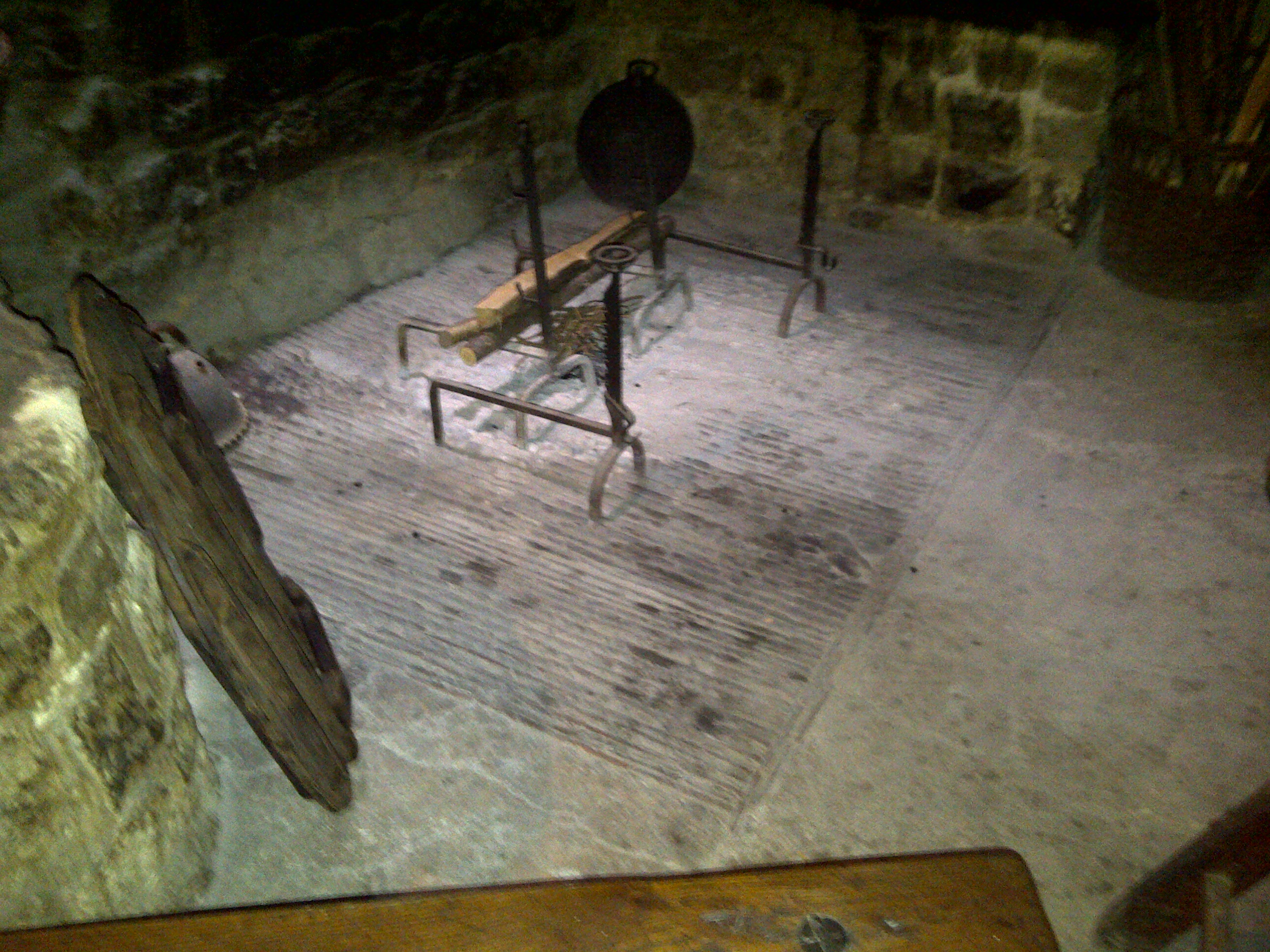 Inside the Wealden House from Chiddingstone – the open fire place.
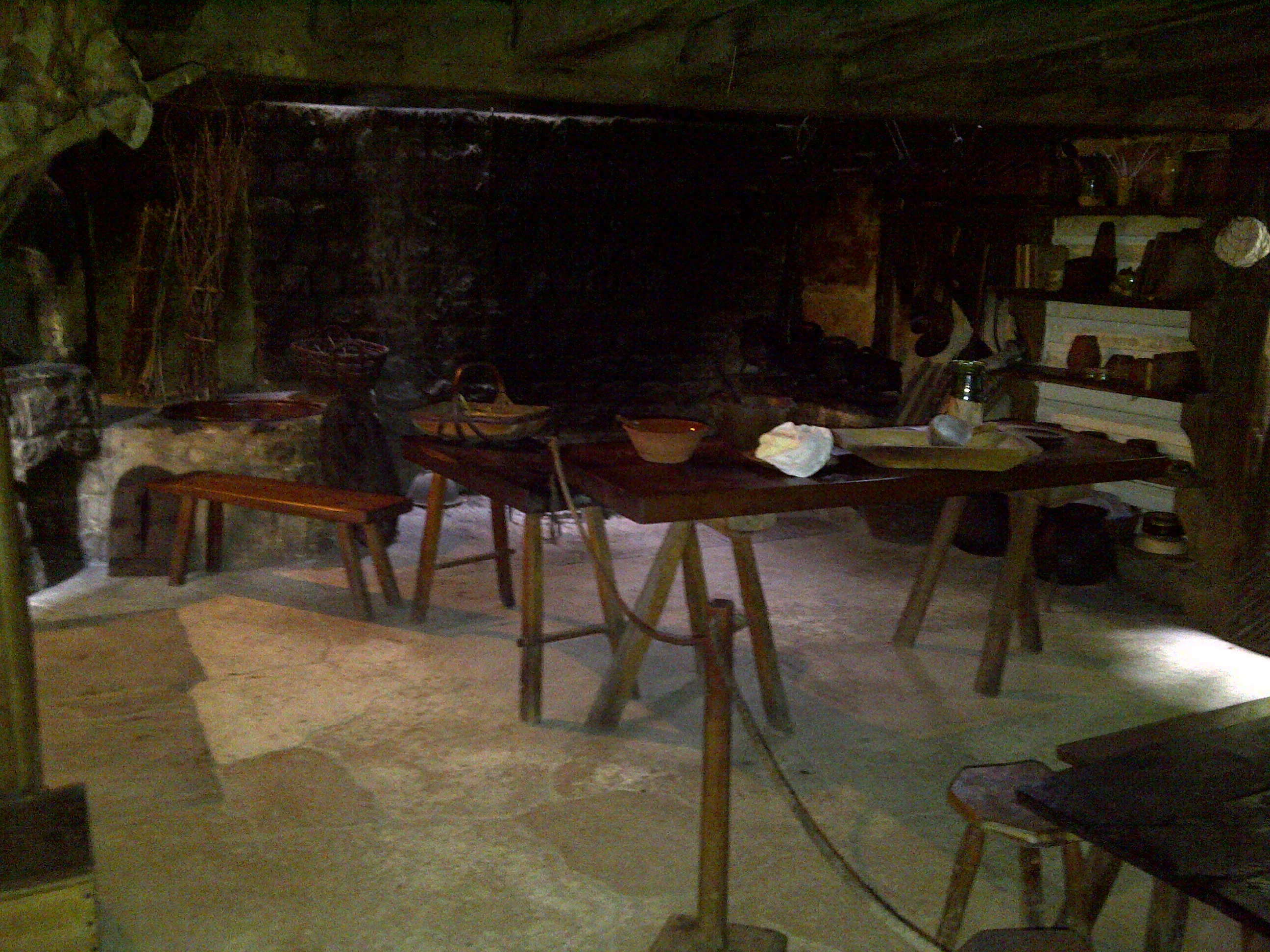 Inside the Wealden House from Chiddingstone – the kitchen area.
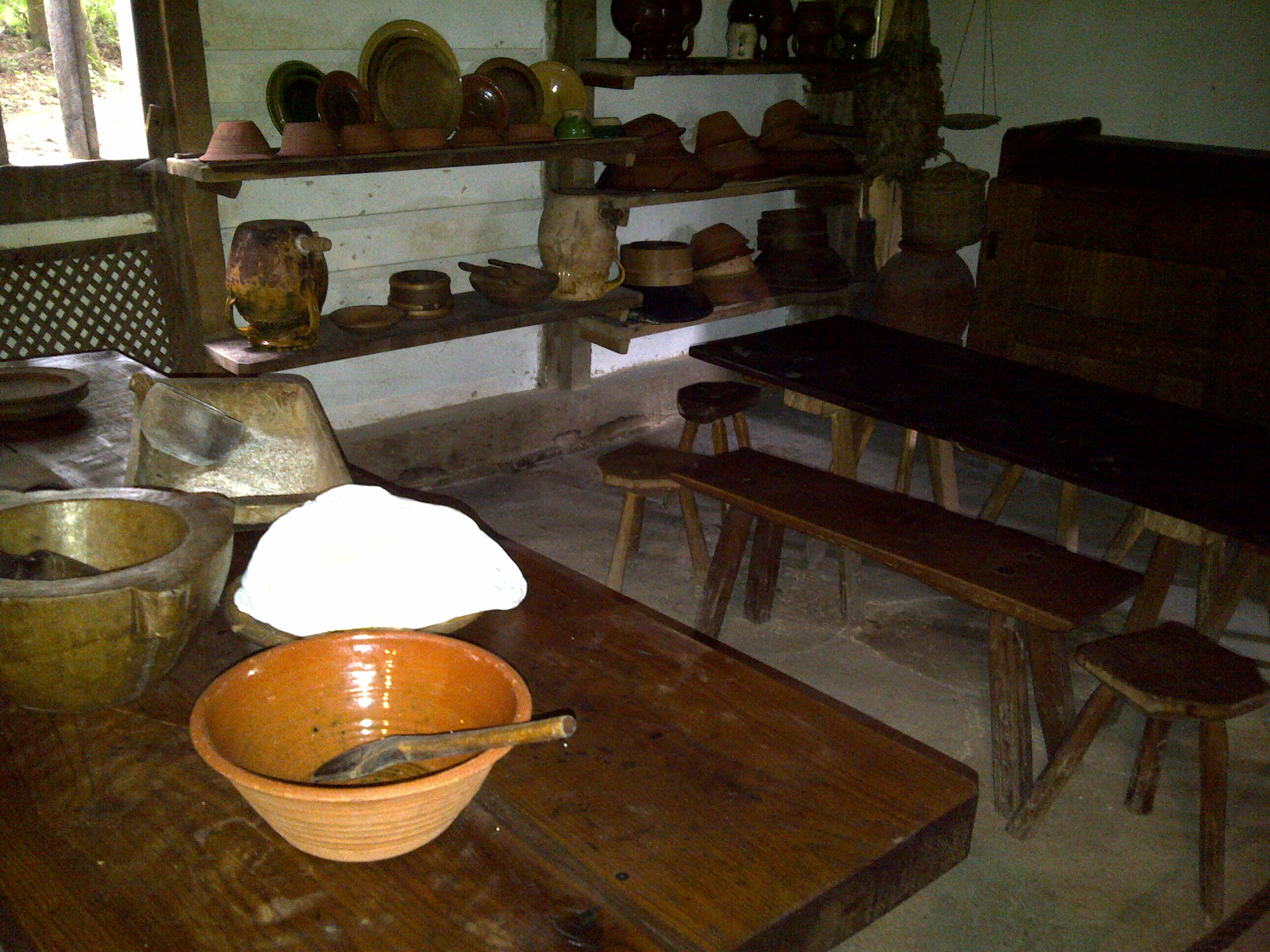 Inside the Wealden House from Chiddingstone – the kitchen area.